|
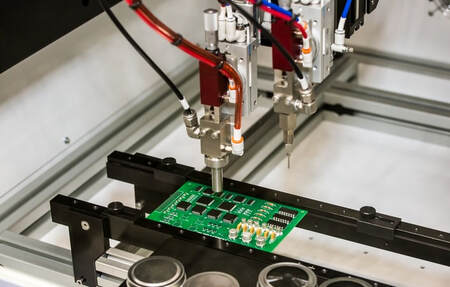
Selective robotic conformal coating application is a precise and automated method used to apply conformal coating to specific areas of printed circuit boards (PCBs) while avoiding others. This process provides accuracy and repeatability, minimizing material waste and ensuring optimal coating coverage. Here is a general overview of the selective robotic conformal coating application process:
1. Preparation:
2. Robotic Dispensing System:
3. Programming:
4. Fixturing:
5. Vision System Integration:
6. Coating Application:
7. Curing:
8. Quality Control:
9. Cleaning and Maintenance:
10. Documentation:
- Program Development: Create a digital program or recipe specifying the coating parameters, such as dispensing paths, speeds, and coating thickness.
- Board Inspection: Conduct a visual inspection of the PCB to identify areas that require coating and those that need to remain uncoated.
2. Robotic Dispensing System:
- Robotic Arm: A robotic arm equipped with a dispensing system is used for precise and controlled coating application.
- Dispensing Valve: Select a dispensing valve suitable for the coating material, such as a needle valve or jet valve, which can accurately control the flow of the conformal coating.
3. Programming:
- Coordinate Mapping: The robotic system is programmed to follow specific coordinates on the PCB, ensuring accurate and repeatable coating application.
- Path Planning: Develop a path plan that covers the targeted areas while avoiding sensitive components, connectors, or areas that should remain uncoated.
4. Fixturing:
- PCB Fixturing: Secure the PCB in a fixture to ensure stability and repeatability during the coating process. The fixture helps maintain precise alignment for each board.
5. Vision System Integration:
- Vision Inspection: Integrate a vision system to scan and identify the PCB features and fiducials. This helps the robotic system adjust for any variations in PCB positioning and alignment.
6. Coating Application:
- Dispensing Control: The robotic arm follows the programmed path, and the dispensing valve is controlled to apply the conformal coating precisely where needed.
- Layer Thickness Control: The system ensures consistent coating thickness by adjusting the dispensing parameters, such as flow rate and nozzle height.
7. Curing:
- Curing Method: Depending on the conformal coating material, the PCB may be cured using methods such as thermal curing, UV curing, or moisture curing.
- Curing Station: Some systems integrate a curing station into the robotic cell for a streamlined process.
8. Quality Control:
- Post-Coating Inspection: Implement a quality control step to inspect the coated PCBs for any defects or missed areas.
- Reprogramming and Adjustments: If necessary, make adjustments to the program based on inspection results to improve accuracy for future runs.
9. Cleaning and Maintenance:
- Cleaning Procedures: Implement regular cleaning procedures for the dispensing system to prevent material buildup and ensure consistent coating quality.
- Maintenance Schedule: Follow a maintenance schedule for the robotic system to keep it in optimal working condition.
10. Documentation:
- Record Keeping: Maintain documentation of coating parameters, programs, and inspection results for traceability and process optimization.
Selective robotic conformal coating application offers advantages in terms of precision, efficiency, and repeatability, making it suitable for high-volume production environments where consistency and quality are paramount. The integration of vision systems and advanced dispensing technologies contributes to the success of this automated coating process.
